
Written by Tamara Johnson, RN · Last updated November 6, 2026
Stretch marks are one of the most common skin concerns during pregnancy—and one of the most misunderstood. While genetics can influence how your skin responds to stretching, they are not the only factor. Hormones, growth rate (mama and baby), hydration, and daily skin care all play a role.
The goal isn’t perfection or promises. It’s understanding what’s happening in your skin and supporting it consistently as your body changes.
TLDR: Stretch marks are influenced by genetics, hormones, and how quickly skin stretches—supporting your skin with hydration and gentle care can help keep it comfortable as it adapts.
Note: This article is for educational purposes only and is not medical advice. Always consult your OB/GYN or dermatologist with questions about your skin or pregnancy-safe products.
What are stretch marks?

Stretch marks—also known as striae gravidarum—occur when skin stretches over a relatively short period of time. They form in the dermis, the middle layer of skin that contains collagen and elastin fibers. When these fibers are stressed repeatedly, they can weaken, resulting in visible lines that may appear red, purple, or pink before fading over time.
Are stretch marks genetic?
Genetics can influence natural skin elasticity, collagen structure, and how skin responds to stretching. If stretch marks run in your family, you may be more prone—but genetics alone don’t determine outcomes.
During pregnancy, hormonal shifts and rapid growth place additional demand on the skin. That’s why consistent hydration and gentle, pregnancy-aware skin care are commonly recommended to support skin comfort.

How pregnancy changes your skin
Pregnancy hormones can make skin feel drier, more sensitive, or more prone to irritation. As the belly, breasts, and hips grow, skin stretching can lead to itching and discomfort—two common early signs that skin needs extra support.

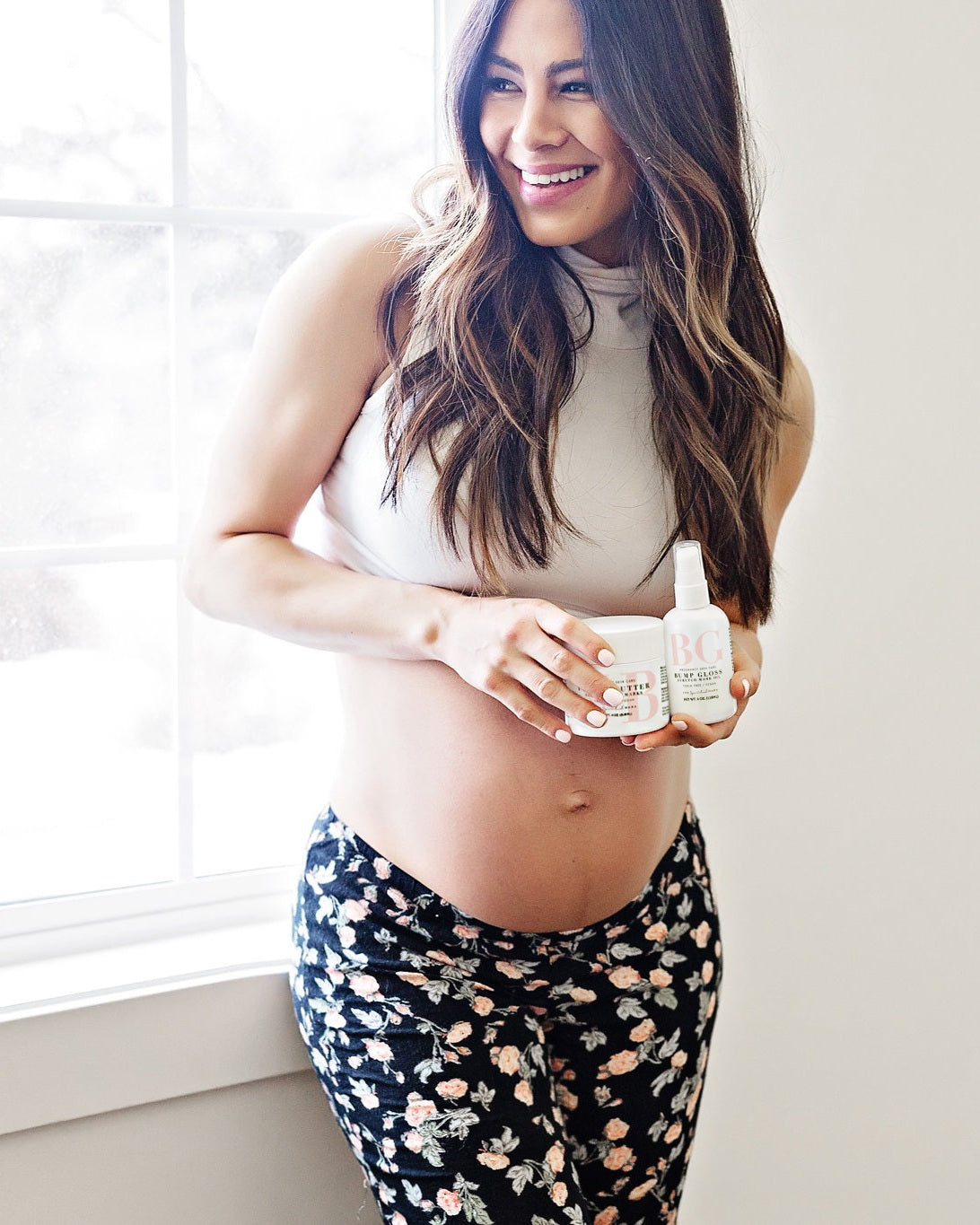
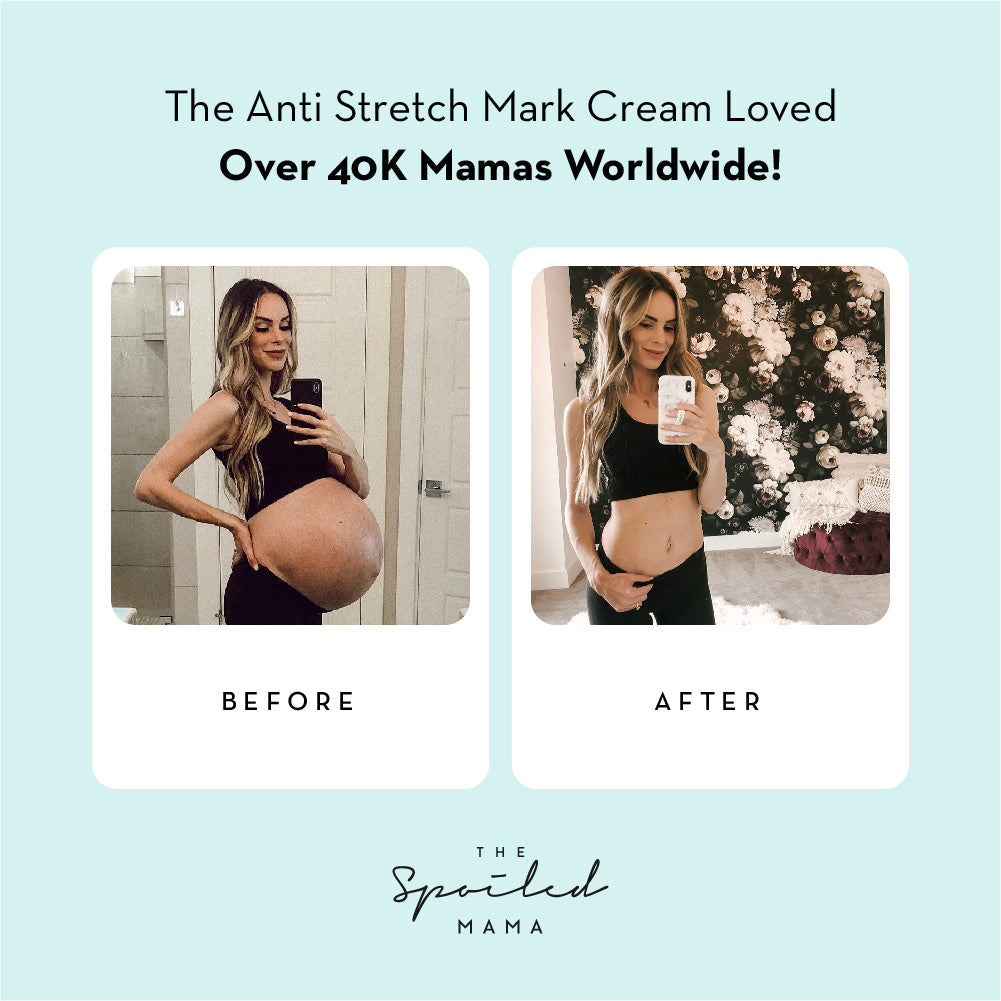
Brand ambassador Cara Chatwin used The Spoiled Mama routine through her triplet pregnancy — shown here at full term and postpartum. Watch Cara’s postpartum stretch mark update on YouTube. Individual results vary. Skincare supports comfort and hydration but outcomes depend on many factors, including genetics and skin response.
Can stretch marks be prevented—or just supported?
There is no guaranteed way to prevent stretch marks. However, many healthcare professionals agree that keeping skin well-hydrated and minimizing irritation may help support skin comfort and appearance during pregnancy.
Do stretch mark creams actually work? An honest look at the evidence
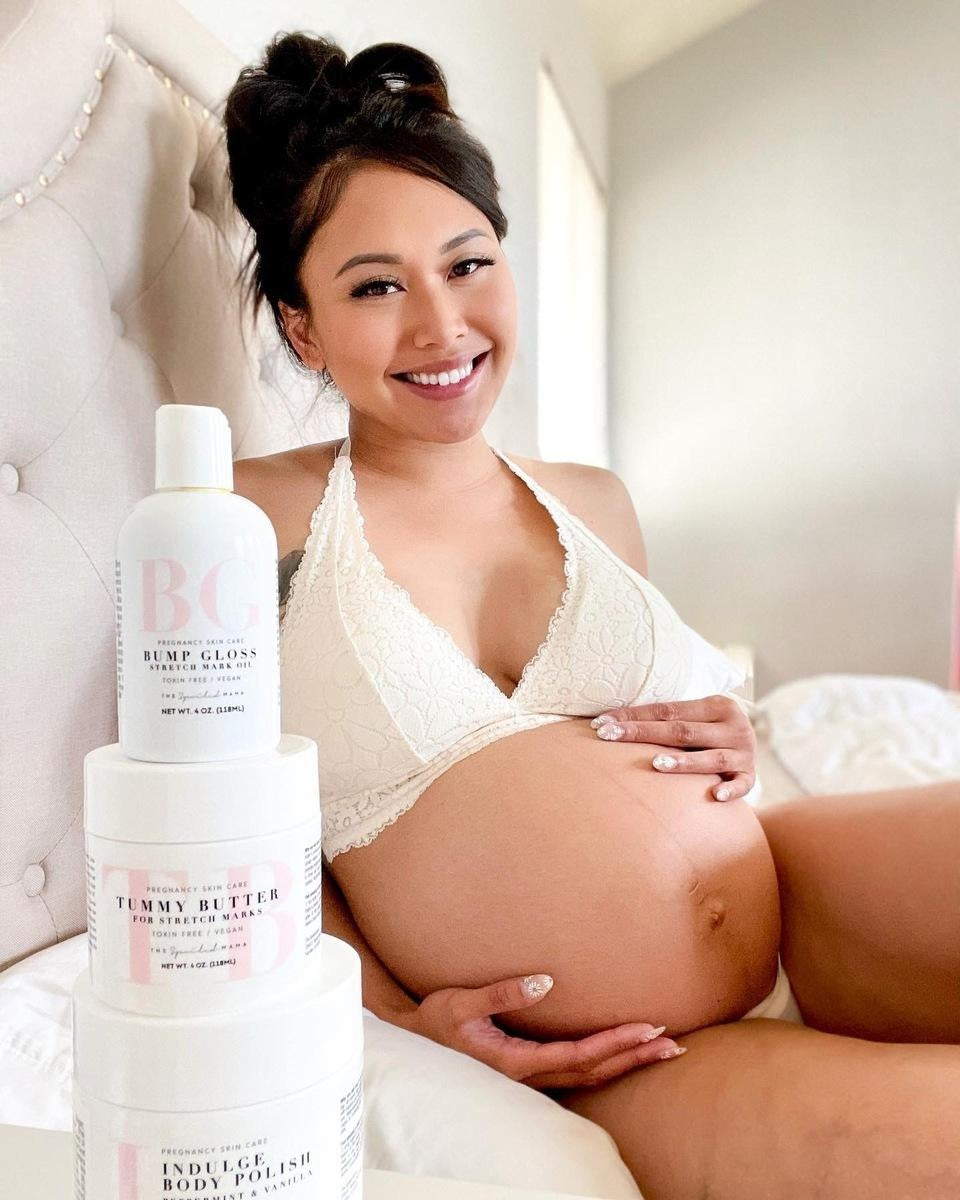
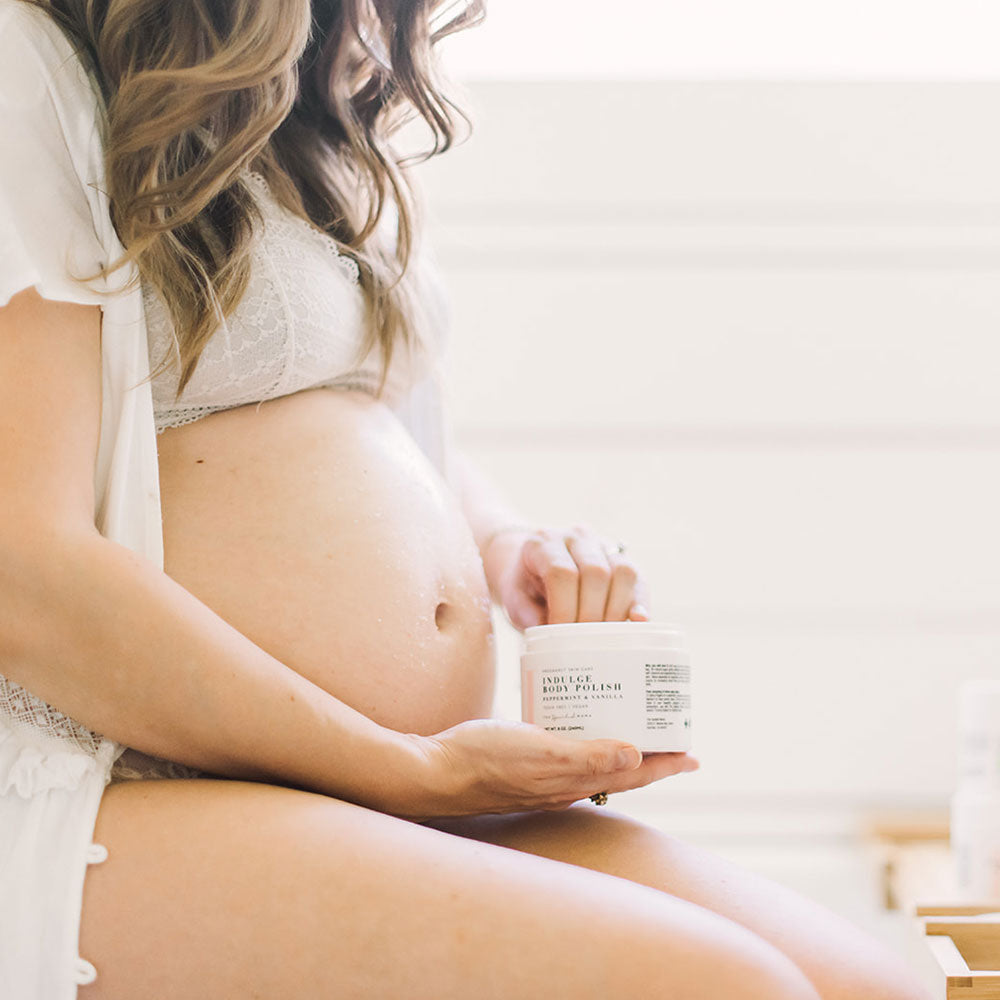
How quickly your skin stretches is the biggest factor: a fast-growing bump, carrying multiples or rapid weight gain all put more strain on skin. Family history plays a part too, so no jar can promise you’ll never get a stretch mark. What you can control is how you care for the skin doing the stretching. Keep it well hydrated, skip hot showers that strip its natural oils, moisturize instead of scratching, and massage your skin every day, the one habit the research keeps pointing back to. A simple routine: in the shower, smooth skin with a gentle scrub like Indulge a few times a week. Right after, while skin is still damp, smooth on Bump Gloss so it glides on and soaks in, then layer Tummy Butter on top to seal it all in.
What the research actually says:
- A Cochrane review of clinical trials found no high-quality evidence that any topical preparation reliably prevents stretch marks in pregnancy—and noted that massaging the skin daily may itself play a role in the small benefits some studies observed.
- A review in the British Journal of Dermatology reached a similar conclusion: evidence for topical prevention is limited, with some botanical ingredients (like Centella asiatica) showing early promise but needing more study.
- The American Academy of Family Physicians notes stretch marks affect most pregnancies, often fade substantially on their own after delivery, and are influenced strongly by genetics and weight-gain pattern.
So why use anything at all? Because hydrated, supple skin is more comfortable as it stretches—less itching, less tightness—and a daily massage ritual is the one habit the research keeps pointing back to. That’s why our founder, a registered nurse, formulated Tummy Butter around deep hydration and daily massage rather than miracle claims.
Our promise: we’ll never tell you a jar can overrule your genes. We’ll give you the most nourishing, pregnancy-safe way to do the one thing you can control—caring for your skin every day.
When should I start caring for stretch mark-prone skin?
The simplest answer: as soon as you know you’re pregnant. Stretch marks tend to appear in the second half of pregnancy, when the belly grows fastest, but a daily routine is easier to keep if it’s already a habit by then. Early care is about keeping skin comfortable and well hydrated as it starts to stretch.
First trimester (weeks 1–13)
- Start a once-a-day moisturizing habit on the belly, hips and breasts.
- Choose fragrance-free or gently scented, pregnancy-safe formulas. Skin can feel more sensitive now.
- Don’t scratch. Your belly and breasts are already starting to grow, and skin can get itchy early. Reach for your butter or oil instead.
- Keep showers and baths short and warm, not hot. Hot water dries skin out. Moisturize while skin is still damp.
- Drink water and eat a balanced diet. Your OB/GYN or midwife can guide healthy weight gain.
Second trimester (weeks 14–27)
- Move to twice a day, morning and night, as your bump grows.
- Apply a rich butter or cream after showering, while skin is still slightly damp.
- Itching is a sign your skin is stretching. Moisturize instead of scratching.
Third trimester (weeks 28–40)
- Keep going twice a day. If skin feels tight, apply Bump Gloss on damp skin first, then your butter on top.
- Don’t forget the underside of your bump, your hips, thighs and breasts.
- If itching is intense, especially on the palms or soles, call your OB/GYN. It can be a sign of a liver condition called cholestasis of pregnancy that needs medical care.
After baby (fourth trimester)
- Keep moisturizing as your skin settles. Most marks soften and fade over the following months.
- See “Fading stretch marks after pregnancy” below for what can help.
Breastfeeding? Here’s how to choose postpartum skincare safely
What’s right for your skin after delivery depends on one question: are you nursing?
If you’re breastfeeding
- Keep using the same pregnancy-safe routine—everything safe during pregnancy stays safe now. Tummy Butter and Bump Gloss are formulated for this stage too.
- Hold off on retinoids (retinol, retinyl palmitate, tretinoin) on large areas of skin until you’ve weaned—and share the ingredient list of any targeted treatment, including our low-dose encapsulated-retinol ReModel serum, with your provider first.
- Anything applied to your chest should be wiped away before nursing, and run new products by your provider.
If you’re not breastfeeding
- You can add targeted treatments to fade marks faster. ReModel Stretch Mark Serum is the step-up treatment for this stage.
- Treatments work best on newer marks—see “Fading stretch marks after pregnancy” below.
- Stubborn marks a year on? A dermatologist can discuss options like laser therapy or microneedling.
Either way: new stretch marks fade naturally from red or purple toward silvery and flat over months—consistency and patience do most of the work.
Why hydration matters for stretching skin
About 6 in 10 first-time moms develop stretch marks, according to a study in the American Journal of Obstetrics & Gynecology. The biggest factors are ones you can’t fully control: genetics, how quickly your body grows, and your baby’s size. What you can control is how well you care for the skin doing the stretching.
Dry skin feels tighter, itchier and less comfortable as it stretches. Keeping it well hydrated is the foundation of every stretch mark routine, and a few everyday habits make a real difference:
- Skip hot showers and baths. Hot water strips skin’s natural oils. The American Academy of Dermatology recommends 5–10 minutes in warm, not hot, water.
- Don’t scratch. Scratching irritates and can break skin that’s already under strain. Reach for your butter or oil instead.
- Moisturize while skin is still damp. Applying right after you towel off helps lock water in.
- Choose rich, gentle formulas. The AAD recommends ingredients like shea butter for dry skin, and suggests skipping fragrance-heavy and alcohol-based products that can make dryness and itch worse.
Our Tummy Butter is made with shea and cocoa butters, aloe, and organic tamanu, rosehip and sea buckthorn oils. Bump Gloss goes on first, while skin is still damp, with Tummy Butter layered over it to seal in moisture. No product can promise you’ll never get a stretch mark, but well-hydrated skin is softer, less itchy and easier to care for at every stage.
Ways to support stretch mark-prone skin during pregnancy
- Stay hydrated to support overall skin comfort
- Aim for steady, provider-guided weight gain
- Choose gentle, pregnancy-safe skincare products
- Avoid very hot showers that may dry the skin
- Use consistent daily moisturization to relieve itching
Our Tummy Butter and Bump Gloss Oil are pregnancy-safe, toxin-free options designed to support stretching skin during pregnancy and breastfeeding.
Building your full routine? Our Pregnancy Skincare 101 guide covers which ingredients are safe during pregnancy, which to avoid, and how to care for your face and body as your skin changes.

The Full Ritual
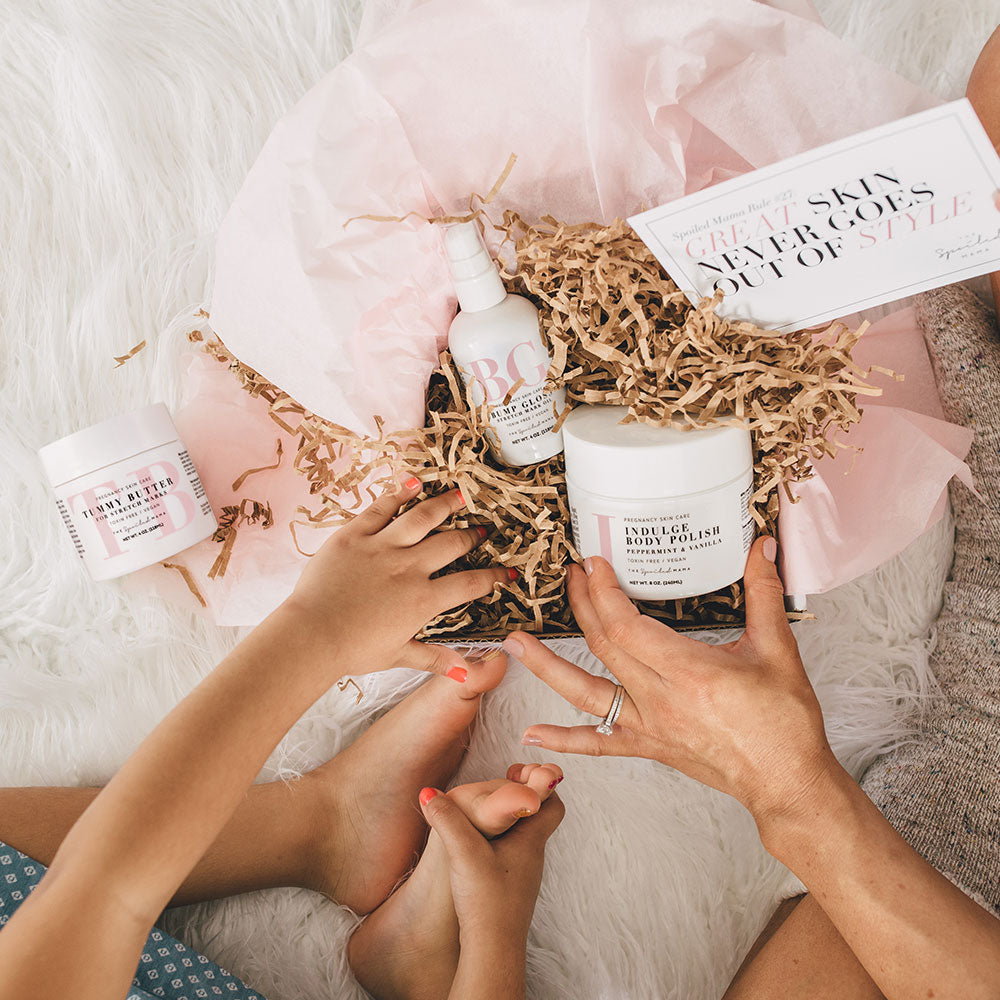
Our complete three-step belly routine to keep stretching skin hydrated, nourished and comfortable, from pregnancy through postpartum.
How Tummy Butter compares to other stretch mark products
Shopping around? Good—you should. Here’s an honest side-by-side of the most-recommended stretch mark products, using each manufacturer’s own published ingredient list.
| Tummy Butter (The Spoiled Mama) | Bio-Oil Skincare Oil (original) | Palmer’s Cocoa Butter | Mustela Stretch Marks Cream | Earth Mama Belly Butter | |
|---|---|---|---|---|---|
| Pregnancy-focused brand | Yes—pregnancy & postpartum only | No—general skincare | No—general body care | Yes—baby & maternity | Yes—maternity & baby |
| Vitamin A / retinoids | None | Contains retinyl palmitate, a vitamin A form most OBs say to avoid in pregnancy | None listed | None listed | None listed |
| Added fragrance | No synthetic fragrance | Yes (fragrance plus listed fragrance allergens) | Yes, in most formulas | Fragrance-free version available | No synthetic fragrance |
| Mineral oil | No | Yes (first ingredient) | Varies by formula | No | No |
| Key moisturizers | Shea & cocoa butters, aloe, organic tamanu, rosehip & sea buckthorn oils | Plant oils in a mineral-oil base | Cocoa butter, vitamin E | Avocado peptides, shea | Shea & cocoa butters, organic herbs |
| Vegan & cruelty-free | Yes | Check label | Check label | Check label | Check label |
| Made for breastfeeding stage too | Yes | Not specified | Not specified | Yes | Yes |
Ingredient details checked October 2026 against each manufacturer’s published ingredient list—formulas change, so always check the current label. If you’re unsure whether a product is right for your pregnancy, ask your OB/GYN.
The short version: plenty of good products exist, but if you’re pregnant or nursing, read labels for retinoids (vitamin A ingredients) and heavy synthetic fragrance—the two things dermatologists most often flag for this stage. Tummy Butter and Bump Gloss are formulated without both, for every trimester and beyond.
Fading stretch marks after pregnancy
New stretch marks usually start out pink, red or purple. Over the months after birth, the color fades and the marks become flatter and lighter. Like any scar, they don’t disappear completely, but they often become much less noticeable.
What can help them fade
- Start while they’re new. The AAD notes that treatments work best on early, colored marks and have little effect on older, silvery ones.
- Keep moisturizing. Daily massage with a rich butter or oil keeps skin soft and comfortable as it settles.
- Try a targeted treatment. Treatments help most on newer marks. Our ReModel Stretch Mark Serum is made for stretch marks, with hyaluronic acid and 0.06% encapsulated retinol. Because it contains retinol, share its ingredient list with your OB/GYN before using it if you’re pregnant, trying to conceive or breastfeeding.
- Ask a dermatologist about procedures. Laser therapy, chemical peels, microdermabrasion and radiofrequency can reduce how visible stretch marks are. None removes them completely.
Be patient and kind to yourself. Many marks look very different several months after birth than they did in the first weeks. They’re a sign of what your body did, not something you did wrong.
Stretch Marks & Pregnancy FAQs
Are stretch marks caused only by genetics?
No. Genetics play a role, but hormones, baby (and mama's) growth rate, hydration, and skin care routines also influence how skin adapts during pregnancy.
Can skincare products prevent stretch marks?
There is no guaranteed prevention. Skincare products can help support hydration and comfort, which may improve how skin feels as it stretches. Quality pregnancy skincare can help.
When should I start using stretch mark products?
Many people begin supporting their skin early in pregnancy, but it’s never too late to start a gentle, consistent routine.
When do stretch marks usually appear during pregnancy?
Most often in the second half of pregnancy, when the belly grows fastest. They can also appear on the breasts, hips and thighs.
Why does hydration matter for stretch marks?
Dry skin feels tighter and itchier as it stretches. Short, warm showers, not scratching, and moisturizing while skin is still damp keep stretching skin softer and more comfortable.
Can I use a retinol stretch mark serum while pregnant?
Recommendations on topical retinol during pregnancy vary, and the American Academy of Dermatology advises checking with your doctor first. If you’re pregnant, trying to conceive or breastfeeding, share the product’s ingredient list with your OB/GYN before using it.
Do stretch marks go away after pregnancy?
They fade over time, from red or purple to lighter and flatter, but they don’t disappear completely. Treatments work best on newer marks.
Is itching on my belly normal?
Mild itching is common as skin stretches, and moisturizing helps. Intense itching, especially on the palms or soles, should be checked by your OB/GYN right away.
Do stretch mark creams help?
How fast your skin stretches matters most, and family history plays a part, so no cream can promise you won’t get stretch marks. A daily routine keeps stretching skin hydrated, soft and less itchy: a gentle scrub a few times a week, Bump Gloss on damp skin after your shower, then Tummy Butter on top. Research reviews, including a Cochrane analysis, point to daily massage as the habit linked to the benefits some studies saw.
What skincare is safe to use while breastfeeding?
The same rules as pregnancy: everything pregnancy-safe stays safe now, including Tummy Butter and Bump Gloss. Hold off on retinoids and heavy synthetic fragrance until you’ve weaned—and if you’re considering our ReModel serum, which uses a low-dose encapsulated retinol, share its ingredient list with your provider first. Wipe any product off your chest area before nursing.
Every pregnancy—and every body—is different. Stretch marks aren’t a reflection of effort, discipline, or doing something “wrong.” They’re simply one of many ways skin adapts during a time of rapid change.
Understanding what influences stretch marks can help you feel more informed and more in control as your body grows. The goal isn’t perfection—it’s supporting your skin with consistency, patience, and care.
Sources: Osman H, et al. Risk factors for the development of striae gravidarum. American Journal of Obstetrics & Gynecology, 2007; American Academy of Dermatology, Stretch marks: Why they appear and how to get rid of them; American Academy of Dermatology, Dermatologists’ top tips for relieving dry skin; Brennan M, et al. Topical preparations for preventing stretch marks in pregnancy. Cochrane Database of Systematic Reviews, 2012; Korgavkar K, Wang F. Stretch marks during pregnancy: a review of topical prevention. British Journal of Dermatology, 2015; Common Skin Conditions During Pregnancy. American Family Physician, 2023.
Mama, what questions do you still have about stretch marks during pregnancy? Leave a comment below.

Pregnant, postpartum or breastfeeding? Shop all non-toxic, OB/GYN-recommended essentials.



1 comment
Susan
Oh my, I love this article! If I had only read this when I was pregnant with my three boys :(. Regardless, it’s a great primer on how to prevent stretch marks – but even if you can’t, the various creams and lotions out there do a great job of taking care of them. That’s what I’ve used to minimize the appearance of mine (and after three kids – there were a LOT).
Thanks for the article,
Susan
Leave a comment
All comments are moderated before being published.
This site is protected by hCaptcha and the hCaptcha Privacy Policy and Terms of Service apply.