

Stretch Marks & Pregnancy: How to Support Your Skin with Simple, Pregnancy-Safe Care
Pregnancy changes your body fast—and your skin is doing a lot of work right along with you. One day everything feels normal, and the next your belly (or breasts, hips, thighs) can feel tight, itchy, and like it’s stretching by the hour.
Stretch marks (also called striae) are extremely common and completely normal during pregnancy. They don’t mean you did anything wrong. While you can’t control every factor, you can support your skin with smart, consistent habits—like daily hydration, barrier support, and gentle massage with pregnancy-safe moisturizers.
This guide breaks down what causes stretch marks, how genetics plays a role, and how to build a simple routine that supports skin comfort and the look of elasticity—without scary or unrealistic promises.

What causes stretch marks
Stretch marks form when the skin stretches faster than it can adapt. When growth occurs quickly, the deeper support fibers in the skin (collagen and elastin) can be overstretched, and fine lines may appear. These lines often start out pink, red, purple, or deeper brown, and many fade over time.
During pregnancy, stretch marks may show up on your belly, breasts, hips, and thighs. Some common reasons include:
- Rapid growth and skin stretching
- Hormonal changes that can affect how elastic skin feels
- Genetics and your skin’s natural structure
- Starting weight and how quickly weight changes

Are stretch marks genetic?
For many people, genetics is a big piece of the puzzle. If your mom or close relatives had stretch marks during pregnancy, your chances may be higher too—and that’s not a failure. Your DNA can influence collagen structure, skin elasticity, and how your skin responds to hormonal shifts.
Even with higher genetic risk, supportive skincare can still help your skin feel calmer, more hydrated, and less uncomfortable as it stretches. Think of it as caring for your skin while it does something extraordinary.
Why hydration and oils matter
When skin is well hydrated, it tends to feel softer, smoother, and less itchy—especially during pregnancy when everything can feel stretched and sensitive. Moisturizers and oils support your skin in two main ways:
- Water support: Humectants (aloe or glycerin) help pull in and hold onto moisture.
- Barrier support: Rich butters and nourishing oils help seal in moisture and reduce dryness.
One helpful note: oils don’t add water to skin on their own. Instead, they help slow water loss—so they work best when used on slightly damp skin or layered over a moisturizer.
How Tummy Butter supports skin elasticity
A “Tummy Butter” is usually a richer moisturizer made for areas that stretch during pregnancy. The goal is simple: keep skin comfortable, moisturized, and supported as your body changes.
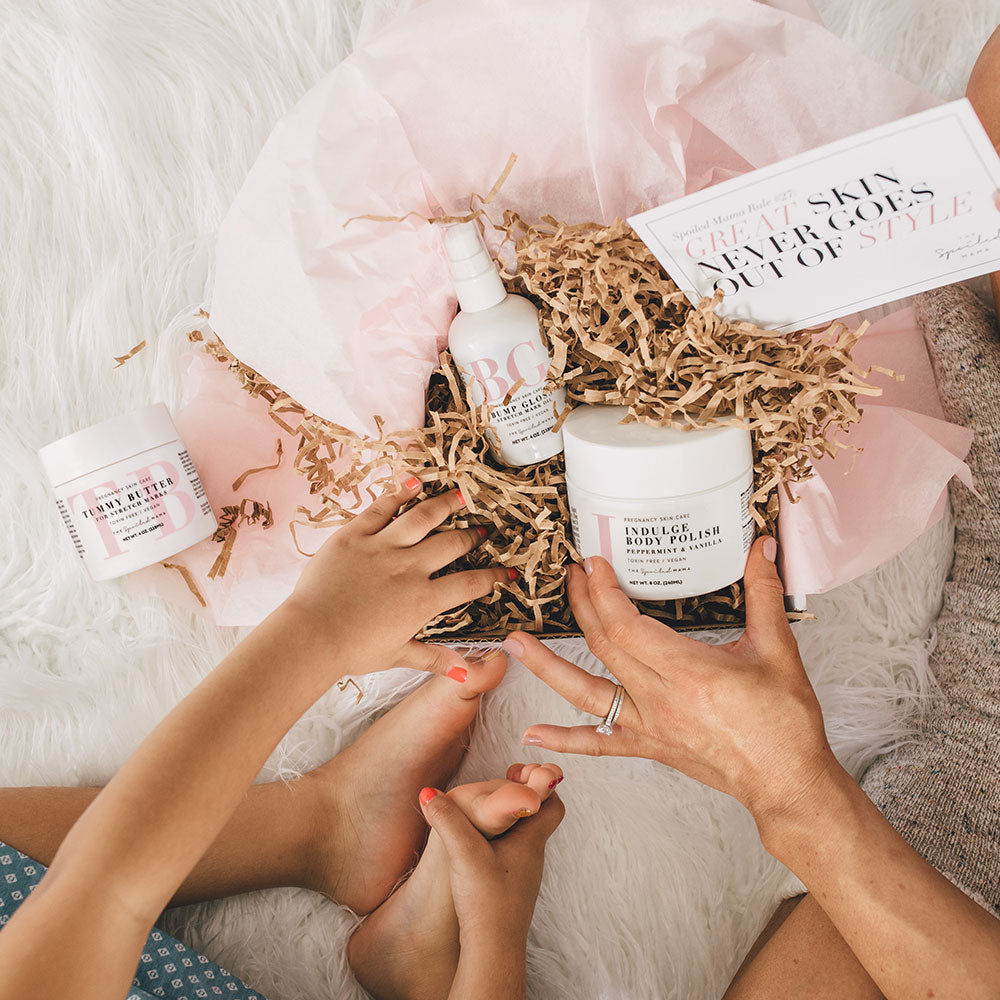
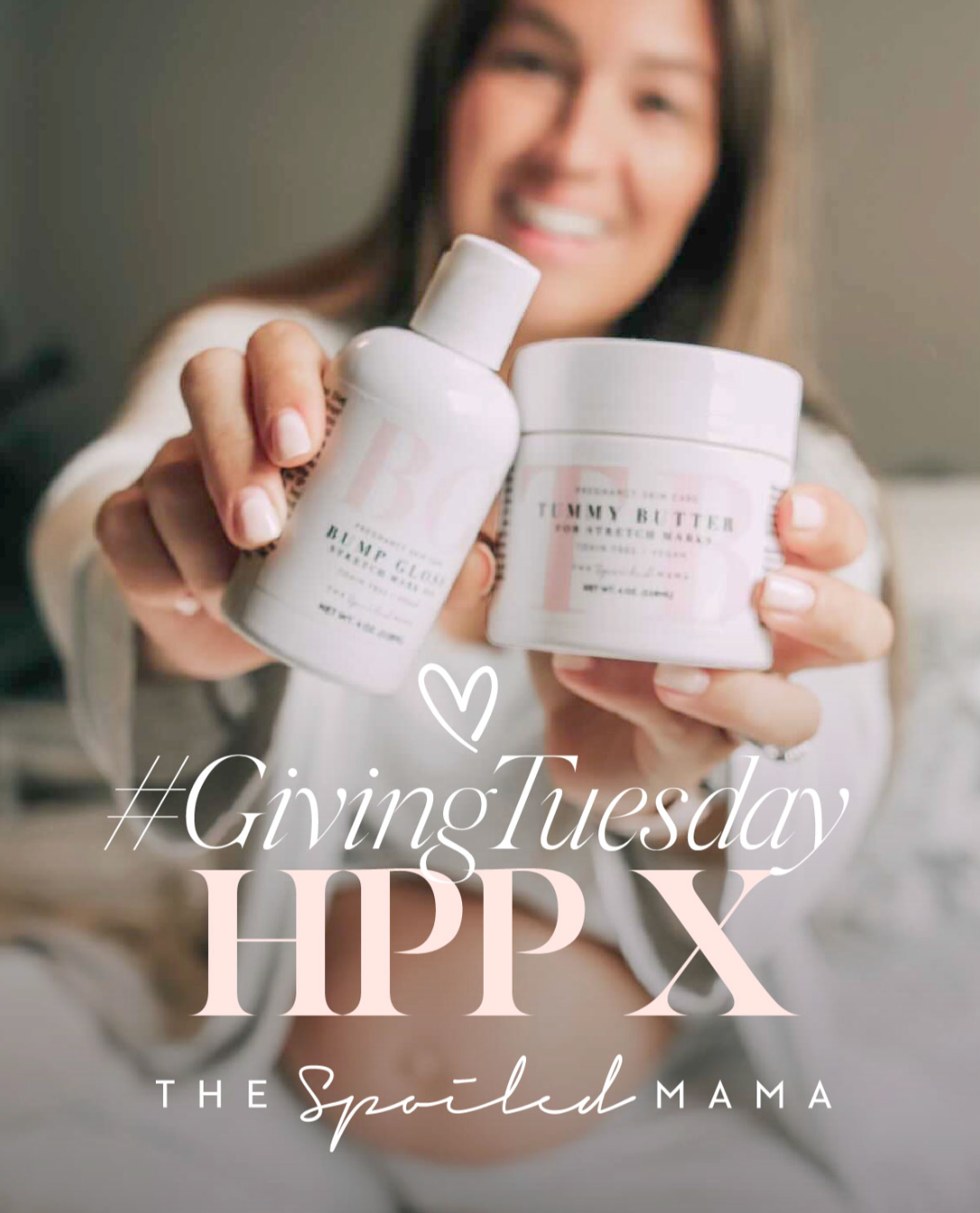
The Spoiled Mama Tummy Butter is positioned as a pregnancy-safe option formulated with ingredients commonly used to support moisture, softness, and the look of resilience—like shea butter, aloe, vitamin E, cocoa butter, and jojoba oil.
Deep hydration
Daily moisturizing can help reduce dryness and that “too-tight” feeling. Rich butters and soothing ingredients help skin feel more supple as it stretches.
Barrier support and antioxidant care
Your skin barrier is like a protective shield. When it’s supported, skin tends to feel less reactive and more comfortable. Ingredients like vitamin E (an antioxidant) and nourishing oils are often used to support the barrier and help with dryness.
Massage and circulation
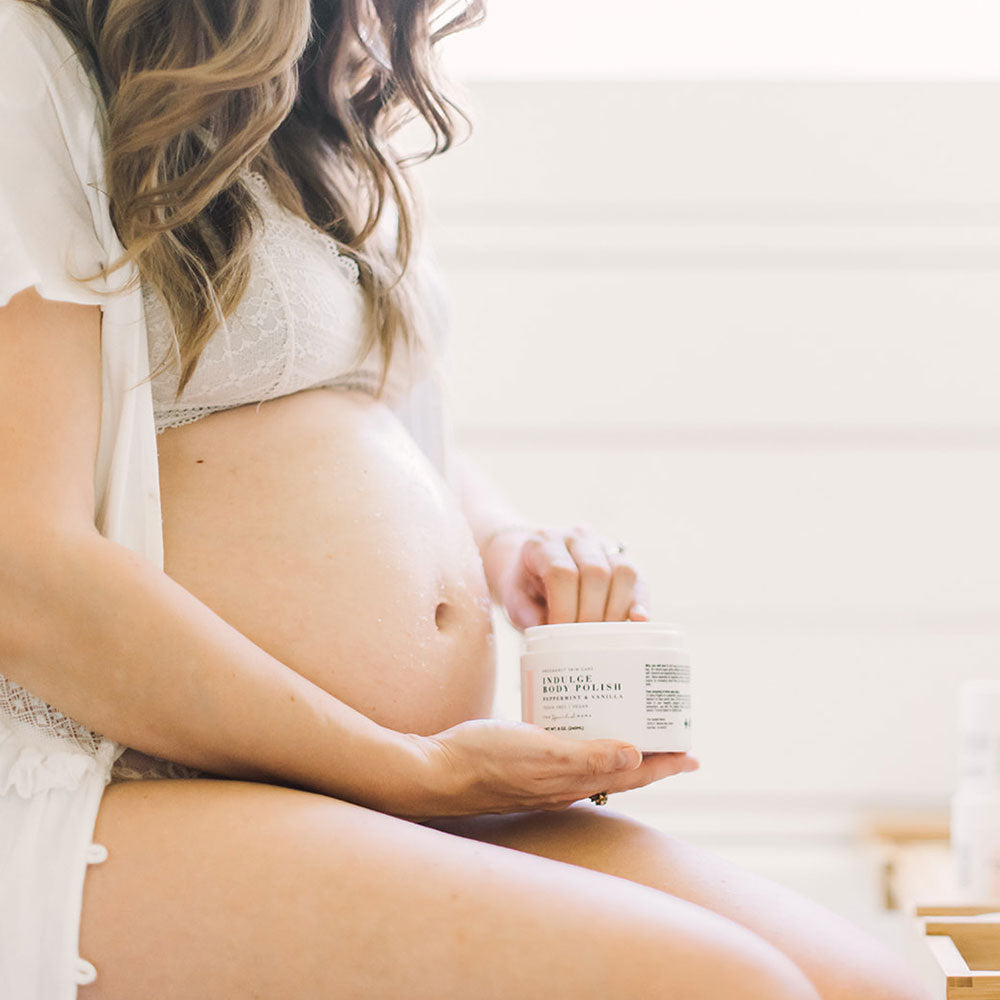
Gentle massage helps you apply consistently to high-stretch areas (belly, hips, thighs, and breasts) and can feel especially soothing when skin is itchy or tight. It also helps spread product evenly so you’re not missing the spots that need it most.


Our Best Seller
Tummy Butter for Stretch Marks
A rich, fast-absorbing, non-greasy belly butter made for dry, itchy, stretching skin, through pregnancy and postpartum.
Best pregnancy-safe ingredients
If you’re shopping for a body moisturizer during pregnancy, look for ingredients that support moisture, comfort, and the skin barrier. Common pregnancy-friendly options include:
- Shea butter: A rich emollient that helps soften and reduce dryness.
- Cocoa butter: Helps seal in moisture and reduce water loss.
- Jojoba oil: A lightweight oil often used to support softness and barrier comfort.
- Aloe vera: Helps soothe and support hydration.
- Vitamin E: An antioxidant commonly used in moisturizers.
- Fatty-acid–rich oils: Often used to support softness and help with dry, stretched-feeling skin.
If you’re curious about specific oils, you can also read: Tamanu oil benefits and uses.
For a full list of ingredients that are safe during pregnancy, and the ones to skip, see our Pregnancy Skincare 101 guide.
How and when to apply
Consistency matters more than perfection. The best routine is the one you’ll actually do—especially on the tired days.
Step-by-step routine
- Start early: Many people begin as soon as they find out they’re pregnant.
- Apply twice daily: Morning and night is a simple, realistic rhythm.
- Focus on high-stretch areas: Belly, breasts, hips, thighs—use gentle circular motions.
- After a shower: Moisturize when skin is slightly damp to help seal in hydration.
Want to make it even easier? Keep your Tummy Butter where you’ll see it—next to your toothbrush, on your nightstand, or by your pajamas. A tiny habit cue can make a big difference. 
FAQs
Can you prevent stretch marks completely?
Not always. Genetics, how quickly your body changes, and hormonal shifts can all play a role. What you can do is support your skin with hydration, barrier-friendly ingredients, and consistent care to improve comfort and reduce dryness.
When should I start using belly butter during pregnancy?
Many people start as soon as they know they’re pregnant. Starting early can help with dryness and that tight, itchy feeling as your skin begins to stretch.
How often should I apply moisturizer to help with stretch marks?
Twice daily is a practical goal for many pregnant people. If your skin feels extra dry or itchy, you can apply more often—especially after bathing or washing.
What ingredients should I avoid during pregnancy?
If you’re unsure, ask your OB/GYN, midwife, or dermatologist—especially for products with stronger “active” ingredients. Many people avoid or carefully manage certain ingredients (like retinoids) during pregnancy based on medical guidance.
Final summary
Stretch marks are common and normal during pregnancy, and genetics often plays a major role. Even so, daily hydration and barrier support can help your skin feel more comfortable and look healthier as it stretches. A simple, consistent routine—especially after showers and before bed—can be a small way to care for your changing body through pregnancy and postpartum.
If you want to explore more pregnancy-safe body care options, you can browse: The Spoiled Mama pregnancy must-haves.
Medical disclaimer: This article is for general education and does not replace medical advice. If you have a history of skin conditions, irritation, or concerns about ingredients during pregnancy or postpartum, talk with your OB/GYN, midwife, or a board-certified dermatologist.
Pregnant, postpartum or breastfeeding? Shop all non-toxic, OB/GYN-recommended essentials.

Leave a comment
All comments are moderated before being published.
This site is protected by hCaptcha and the hCaptcha Privacy Policy and Terms of Service apply.