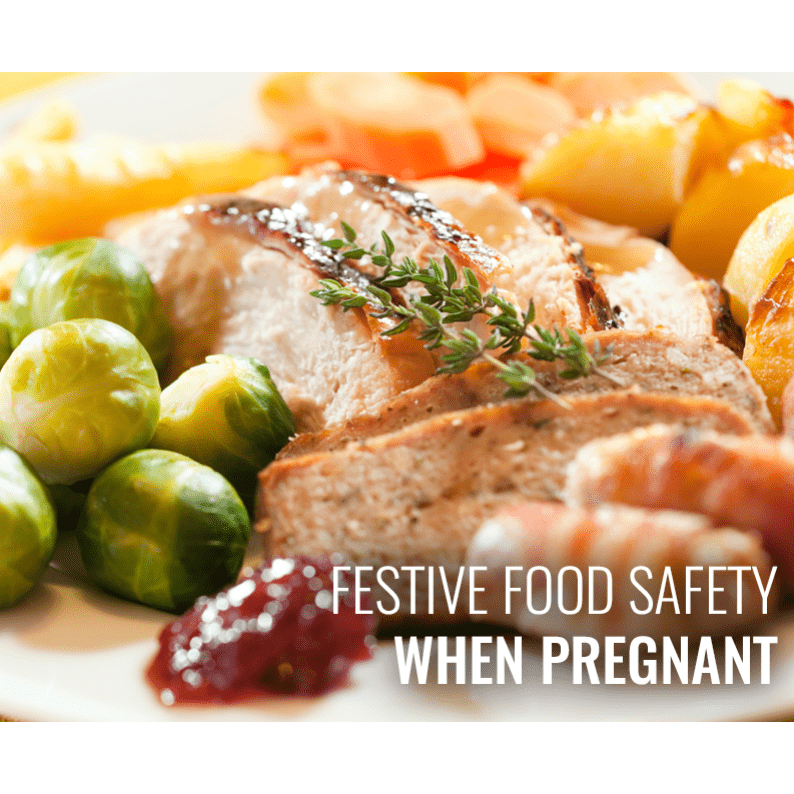
The holidays definitely tend to center around food—but if you’re pregnant, some party favorites aren’t worth the risk. Here’s the 411 on holiday foods to avoid when pregnant (and the easy swaps that still let you enjoy every bite).
Quick note: This blog is for educational purposes and isn’t medical advice. Always check with your OB/GYN or midwife for personalized guidance.

Watch the temp at parties and buffets
A simple rule: if it’s meant to be served hot, eat it hot. If it’s meant to be served cold, keep it cold. Avoid foods that have been sitting out and drifting toward room temperature. Food-safety guidance recommends keeping hot foods hot and cold foods cold—and following the “2-hour rule” for perishables left out. (If it’s a very warm room, that window can shrink.)
If you’re tempted by hot foods that cooled down, reheat until steaming hot. For dips and cheesy dishes: if it’s bubbling and you’re eating it warm, that’s generally the safer play.
Cheese: yay or nay?
Cheese can get confusing fast. The biggest pregnancy concern is listeria, which is more likely with unpasteurized dairy and certain soft cheeses. The safest move: choose pasteurized options and skip anything questionable at a party where labels aren’t available.
A quick cheat sheet
- Usually OK: Hard cheeses (cheddar, parmesan, gruyère, etc.).
- Usually OK if pasteurized: Cream cheese, cottage cheese, mozzarella, ricotta, sour cream, crème fraîche, processed cheese/spreads.
- Avoid if unpasteurized (and be cautious at parties): Soft-ripened cheeses like brie/camembert, blue-veined cheeses, and certain fresh soft cheeses (for example, queso fresco–type cheeses).
- Good news: Many higher-risk cheeses become safer when cooked thoroughly (think: baked dishes, pizzas, hot casseroles).

Easy on the teas (except pregnancy-safe blends)
Some herbs aren’t pregnancy-friendly, and labels can be vague—so it’s smart to run herbal blends by your provider, especially if they include strong botanicals. If you want an easy, pregnancy-specific option: Happy Mornings Pregnancy Tea for Nausea and Bottom of the 9th Labor Prep Tea are designed for the pregnancy journey (still: always confirm with your OB/midwife if you have questions).
Cut the caffeine (aim for under 200 mg/day)
When it comes to caffeine, many guidelines recommend keeping it under 200 mg per day. Remember: caffeine adds up from coffee, tea, soda, chocolate, and even coffee-flavored desserts.
Lose the booze
If you’re pregnant (or trying), the safest choice is to skip alcohol. CDC guidance states there’s no known safe amount, no safe time, and no safe type of alcohol during pregnancy.
Keep it cooked
Holiday spreads sometimes include higher-risk items like sushi, steak tartare, and undercooked meats. If you can’t confirm it’s fully cooked and safely handled—pass. Also be cautious with foods made with raw/undercooked eggs (like some homemade eggnogs or batters).
Stick with real sugar (and keep it balanced)
For desserts, your best bet is moderation and simple ingredients you trust. If you’re managing blood sugar concerns (like gestational diabetes), follow your provider’s specific guidance.
Tell us, mama—what are you craving this holiday season?

References
We reference trusted public health sources (CDC, ACOG, FDA, USDA/FSIS) for pregnancy food-safety guidance. This article is educational and not medical advice—always follow your OB/GYN or midwife’s recommendations.
- CDC — Safer Food Choices for Pregnant Women: View source
- ACOG — Moderate Caffeine Consumption During Pregnancy: View source
- FDA — Serving Up Safe Buffets (2-hour rule): View source
- USDA/FSIS — Steps to Keep Food Safe (basics + hot/cold holding): View source
- CDC — About Alcohol Use During Pregnancy: View source
Pregnant, postpartum or breastfeeding? Shop all non-toxic, OB/GYN-recommended essentials.


Leave a comment
All comments are moderated before being published.
This site is protected by hCaptcha and the hCaptcha Privacy Policy and Terms of Service apply.