
How Does Tummy Butter Support Stretching Pregnancy Skin?
Pregnancy changes the way skin stretches, feels, and responds to rapid growth. No topical product can guarantee that stretch marks will not develop, but consistent moisturizing can help keep rapidly stretching skin hydrated, soft, supple, and comfortable. Tummy Butter combines moisture-binding glycerin and aloe with 10 botanical oils and butters, led by omega-7-rich sea buckthorn fruit oil, an ingredient now being studied for its effects on collagen and skin biology. [1] [4]
START EARLY
Support skin hydration before dryness and tightness become noticeable.
STAY CONSISTENT
Daily moisturizing helps maintainpregnancy skin pregnancy skincare sea buckthorn sea buckthorn oil omega-7 stretch marks hydration as skin undergoes months of continuous change.
BREAK THE DRY-SKIN CYCLE
Dryness can contribute to itching, and repeated scratching can further disrupt the skin barrier. Keeping skin moisturized helps keep it comfortable and conditioned.
KEEP STRETCHING SKIN SUPPLE
Humectants plus botanical lipids help soften and condition skin during periods of rapid growth.
Not all skincare products are pregnancy-safe.
Pregnancy can change both your skin and which skincare ingredients are appropriate to use. Tummy Butter was formulated specifically for pregnancy and postpartum care and contains no retinoids. If you have allergies, unusually reactive skin, or a pregnancy-specific skin condition, discuss new products with your healthcare provider.
IN THIS ARTICLE
What happens to skin during pregnancy?
Why sea buckthorn fruit oil leads the formula story
The supporting ingredients behind Tummy Butter
Dryness, itching, and the itch-scratch cycle

Pregnancy Skin Is Doing More Than Simply Stretching
Pregnancy creates measurable changes in the mechanical properties of skin. In a human study using objective Cutometer measurements, researchers compared women at eight months of pregnancy with non-pregnant women and found that abdominal skin during pregnancy became less elastic and less deformable, with changes also detected on the thighs. [1]
Pregnancy-related itching is common, too. Research has found that abdominal itching during pregnancy can be associated with the physical stretching of abdominal skin. [2]
This is why we believe pregnancy skincare should begin before the belly feels extremely dry, tight, or uncomfortable. The goal is to maintain hydration and comfort throughout the months when skin is continuously changing.
Want to understand the biology in more detail? Read What Causes Pregnancy Stretch Marks? for a deeper explanation of collagen, elastin, hormones, genetics, and rapid skin expansion.
Sea Buckthorn Fruit Oil: The Standout Botanical in Tummy Butter
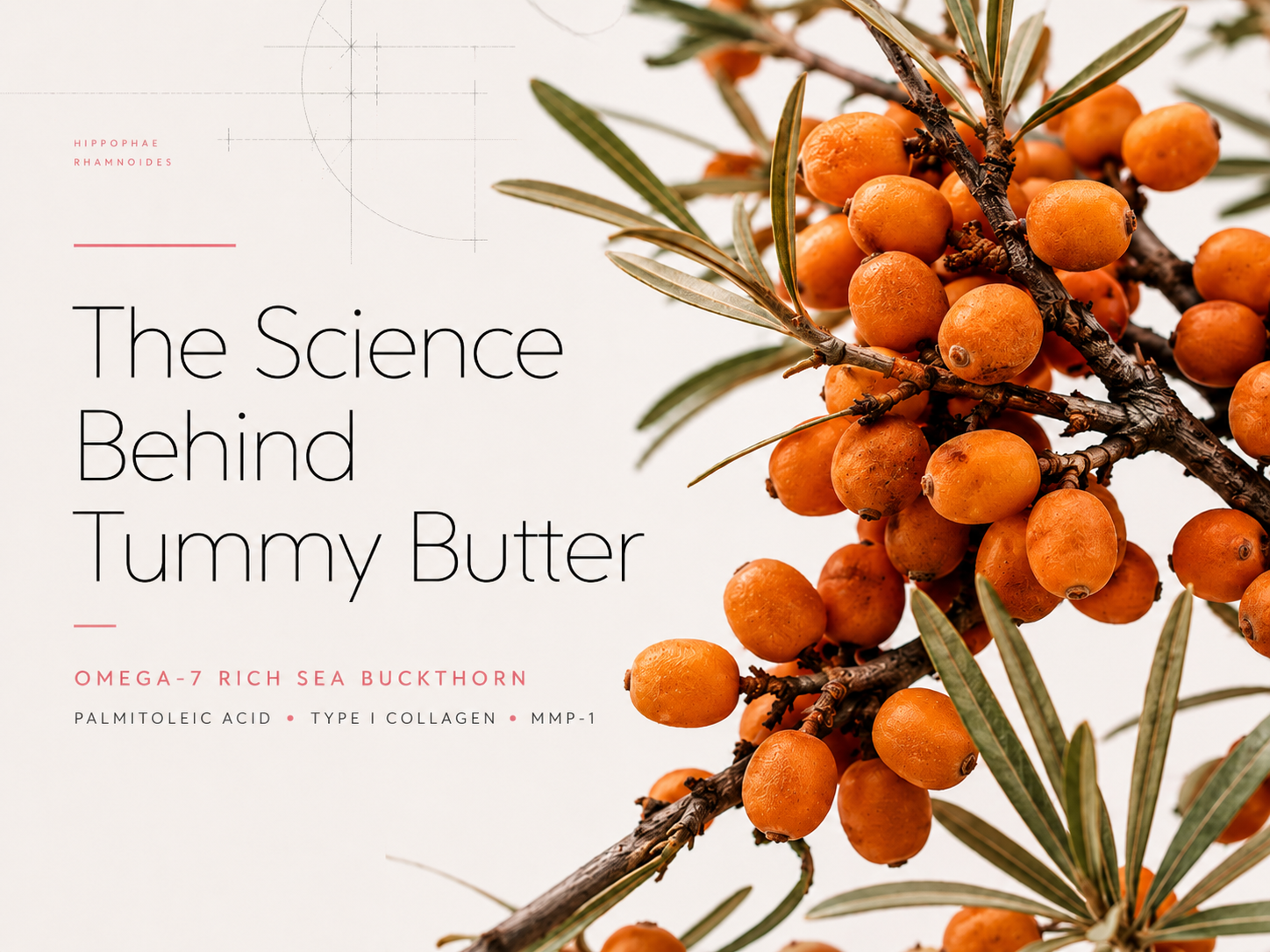
One ingredient in Tummy Butter deserves special attention: Hippophae Rhamnoides (Sea Buckthorn) Fruit Oil.
Sea buckthorn fruit oil is different from sea buckthorn seed oil. The fruit or pulp oil is particularly notable for palmitoleic acid, an omega-7 fatty acid. Published analyses have reported sea buckthorn fruit oil containing roughly 30% or more palmitoleic acid, although the exact fatty-acid composition varies by plant variety, harvest, and processing method. [3]
WHY OMEGA-7 HAS OUR ATTENTION
Sea buckthorn fruit oil is an unusual botanical source of palmitoleic acid, or omega-7. Modern research is investigating how sea buckthorn pulp oil and palmitoleic acid interact with human skin cells, including pathways involving collagen degradation.
What did the sea buckthorn collagen study find?
A 2024 study published in Bioscience, Biotechnology, and Biochemistry examined sea buckthorn pulp oil in normal human dermal fibroblasts, the skin cells involved in producing and maintaining components of the dermal extracellular matrix. [4]
Under UV-B stress, researchers found that sea buckthorn pulp oil:
- Suppressed reactive oxygen species generated by UV-B exposure
- Reduced UV-B-induced cellular damage
- Helped restore procollagen 1A1
- Helped maintain type I collagen
- Suppressed MMP-1, an enzyme involved in collagen degradation
Researchers also studied palmitoleic acid, the major fatty acid in the sea buckthorn pulp oil used in the study. Palmitoleic acid also helped maintain collagen levels while suppressing MMP-1 expression in UV-stressed human dermal fibroblasts. [4]
IMPORTANT SCIENCE NOTE
This was laboratory research using human skin cells. It was not a clinical trial of Tummy Butter on pregnant women. We cite this research to explain why sea buckthorn fruit oil is an interesting ingredient, not to claim that Tummy Butter has been clinically proven to increase collagen or prevent stretch marks.
The Supporting Ingredients Behind Tummy Butter
Sea buckthorn is only part of the formula. Tummy Butter was developed as a proprietary, multi-ingredient moisturizer that combines water-binding humectants with a complex botanical lipid system.
10 Botanical Oils + Butters
Tummy Butter contains cocoa butter, shea oil, sweet almond oil, sea buckthorn fruit oil, kukui seed oil, tamanu seed oil, meadowfoam seed oil, olive oil, avocado oil, and rosehip seed oil.
Rather than relying on one trendy ingredient, the formula uses multiple botanical lipids to help soften, condition, and replenish the feel of dry pregnancy skin.
Pair Tummy Butter With Bump Gloss
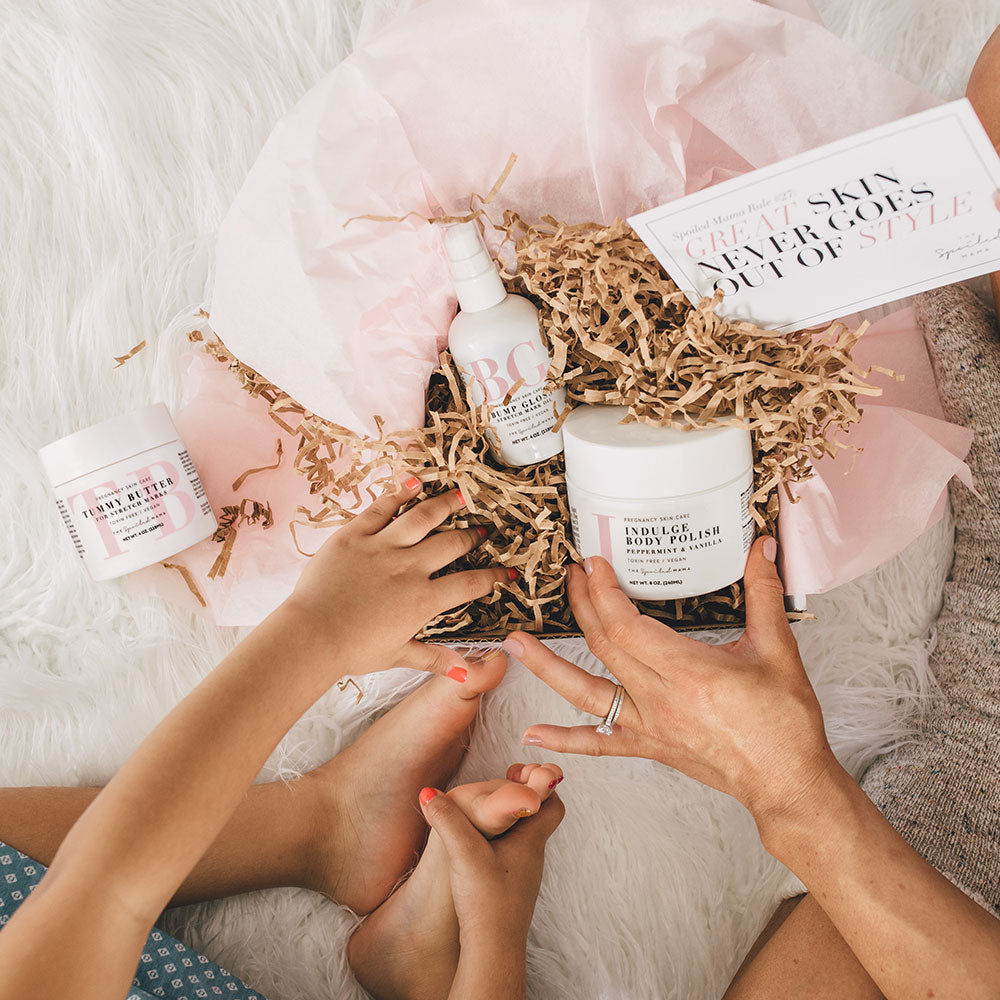
Tummy Butter pairs well with Bump Gloss, our pregnancy belly oil. Layer Bump Gloss over Tummy Butter to help condition the skin and seal in moisture.
Both formulas feature sea buckthorn and tamanu to help keep rapidly stretching skin soft, supple, and comfortable.
Glycerin: Clinically Studied Hydration
Glycerin may not be the trendiest ingredient on an ingredient label, but it is one of the most established humectants in skincare.
In a randomized, double-blind crossover study involving 51 volunteers with dry skin, researchers evaluated the individual and combined effects of glycerol and petrolatum in an emollient system. The glycerol-containing component significantly improved skin hydration. [5]
Why it matters: Humectants such as glycerin help attract and retain water in the outer layers of skin, complementing the oils and butters that soften and condition it.
Aloe Vera: Human Hydration Research
In a human study involving 20 women, researchers evaluated topical formulations containing different concentrations of freeze-dried Aloe vera extract. Repeated application increased stratum corneum water content compared with the vehicle formulation. [6]
Tummy Butter contains Aloe Barbadensis Leaf Juice, rather than the exact freeze-dried aloe extract used in that study, so the study's individual results should not be interpreted as clinical results for Tummy Butter. It does, however, support aloe's role as a hydration-focused skincare ingredient.
Tamanu Oil: Research on Human Skin Cells
Tummy Butter also contains Calophyllum Inophyllum (Tamanu) Seed Oil, a botanical that has attracted scientific attention for its skin-repair-related biological activity.
A published study examining tamanu oil on human keratinocytes and dermal fibroblasts reported activity involving cell proliferation and extracellular-matrix-related processes, including collagen and glycosaminoglycan production. [7]
Like the sea buckthorn research above, this is ingredient-level cellular research and should not be interpreted as a clinical trial demonstrating that Tummy Butter repairs stretch marks.
What Can Tummy Butter Do With Consistent Use?
The most scientifically defensible benefits of Tummy Butter center on hydration, softness, suppleness, barrier support, and comfort.
WITH CONSISTENT USE, TUMMY BUTTER HELPS:
- Maintain skin hydration with humectants including glycerin and aloe
- Soften dry, rough-feeling skin with a rich multi-lipid emollient system
- Keep rapidly stretching skin supple and conditioned
- Support the skin's moisture barrier and help protect against the effects of dryness
- Improve comfort when skin feels dry, tight, or itchy as the body changes
Why Starting Early and Staying Consistent Matters
Pregnancy is not one sudden stretch. Your skin adapts over months of continuous physical change.
That is why our philosophy is simple:
Start before your skin feels stressed. Stay consistent as your body changes.
Starting early does not mean that applying a moisturizer during the first trimester has been proven to prevent stretch marks. It means establishing a routine that supports hydration before dryness, tightness, and discomfort become noticeable.
Consistency matters because moisturizers work while you use them. Regular application helps maintain hydration and conditioning through the months when the belly, breasts, hips, thighs, and other areas are rapidly changing.
Dryness, Itching, and the Itch-Scratch Cycle
If your growing belly feels itchy, you are not imagining it. Pregnancy-related pruritus is common, and research has specifically associated abdominal itching with pregnancy-induced stretching of abdominal skin. [2]
Dry skin can make that discomfort worse. Scratching can then further irritate or disrupt the skin barrier, contributing to an itch-scratch cycle.
Scratching is not considered a cause of pregnancy stretch marks. Stretch marks involve changes deeper within the dermis and are influenced by factors including rapid growth, hormones, genetics, and individual susceptibility. However, vigorous or repeated scratching can still damage the skin barrier and cause traumatic skin injury.
That gives moisturizing an important role even without claiming that it can guarantee stretch-mark prevention: well-moisturized skin is more comfortable skin.
MAMA NOTE: Severe or persistent pregnancy itching, particularly itching without a rash or itching involving the palms of the hands or soles of the feet, should be discussed promptly with your OB/GYN or healthcare provider rather than assumed to be ordinary dry skin.
What Does the Science Really Say About Stretch Marks?
Stretch marks, also called striae distensae or striae gravidarum during pregnancy, involve changes within the dermal connective tissue. Genetics, hormones, rapid growth, and skin properties can all influence whether they develop.
For a deeper explanation, read What Causes Pregnancy Stretch Marks?
What about cocoa butter?
Cocoa butter has been associated with pregnancy skincare for generations, but controlled clinical research has not shown that cocoa butter by itself reliably prevents pregnancy stretch marks.
In one randomized double-blind trial involving 300 pregnant women, stretch marks developed in 44% of women assigned cocoa butter cream and 55% of women assigned placebo. The difference was not statistically significant. [8]
A separate randomized placebo-controlled study also found no significant preventive benefit from cocoa butter lotion. [9]
That does not make cocoa butter a bad skincare ingredient. It means moisturizing skin and preventing a dermal scar are not the same biological claim.
Cocoa butter remains one part of Tummy Butter's larger emollient system, where its role is to help soften and condition dry skin.
What We Can Say With Confidence
| Tummy Butter can help | Tummy Butter cannot guarantee |
|---|---|
| Maintain hydration | That stretch marks will never develop |
| Keep dry skin soft and supple | Complete removal of existing stretch marks |
| Condition rapidly stretching skin | Changes to genetics or pregnancy hormones |
| Help relieve dry, tight, itchy-feeling skin | Identical results for every pregnancy |
| Support the skin's moisture barrier | Clinically measured collagen changes from Tummy Butter itself |
Why Tummy Butter Is Different From a Basic Belly Lotion
Tummy Butter is not simply cocoa butter mixed into a basic lotion base. It is a proprietary formula developed specifically for changing pregnancy and postpartum skin.
The formula combines hydration-focused ingredients with a 10-oil-and-butter botanical lipid complex, including specialty botanicals such as sea buckthorn fruit oil, tamanu, kukui, meadowfoam, avocado, and rosehip.
You're not paying for one trendy hero ingredient. Tummy Butter uses multiple ingredient systems that perform different jobs: attracting water, conditioning dry skin, replenishing lipids, supporting the moisture barrier, and keeping rapidly stretching skin comfortable.
START EARLY. STAY CONSISTENT.
Give rapidly stretching skin intensive daily moisture from bump to postpartum.
SHOP TUMMY BUTTERFrequently Asked Questions About Tummy Butter & Pregnancy Skin
Aren't stretch marks genetic, meaning there's nothing I can do?
Genetics matter, but they are not the entire story. Family and personal history can influence your likelihood of developing stretch marks, along with pregnancy-related hormones, rapid growth, and how your skin responds to mechanical stress. Skincare cannot change your genetics, but you can still care for your skin by maintaining hydration, supporting its moisture barrier, and keeping rapidly stretching areas soft and comfortable.
Is Tummy Butter guaranteed to prevent stretch marks?
No. No topical moisturizer can honestly guarantee that a pregnant woman will not develop stretch marks. Tummy Butter is designed to provide intensive hydration and conditioning throughout the months when skin is undergoing rapid change. Results can vary because genetics, hormones, age, rate of growth, and other factors influence stretch-mark development.
When should I start using Tummy Butter?
Start early and stay consistent. You do not need to wait until your belly feels dry, tight, or itchy. Beginning a regular moisturizing routine early helps maintain hydration and comfort as the body changes throughout pregnancy.
How often should I use Tummy Butter?
Consistency matters more than waiting for skin to feel uncomfortable. Apply Tummy Butter regularly to the belly, breasts, hips, thighs, and other areas experiencing rapid change. Massage it into the skin rather than applying only when dryness becomes noticeable.
Does scratching itchy pregnancy skin cause stretch marks?
Scratching is not considered a cause of pregnancy stretch marks. Stretch marks involve changes deeper within the dermal connective tissue. Repeated scratching can still irritate and disrupt the skin barrier and may cause surface injury. Keeping dry, stretching skin moisturized can help improve comfort and reduce the dryness that contributes to itching.
What if I already have stretch marks? Can I still use Tummy Butter?
Yes. Existing stretch marks do not mean your skin no longer benefits from moisturizing. Tummy Butter can help keep the skin surrounding existing marks hydrated, soft, and comfortable while improving the look and feel of dry surface texture. Stretch marks naturally change in color and appearance over time, but Tummy Butter is not presented as a medical treatment that erases established striae.
Is Tummy Butter safe to use during pregnancy?
Tummy Butter was formulated specifically for pregnancy and postpartum skincare and contains no retinoids. Not every skincare ingredient is recommended during pregnancy, which is why it is important to review ingredient lists carefully. If you have known allergies, unusually sensitive skin, or a pregnancy-specific skin condition, discuss your skincare routine with your healthcare provider.
Why does Tummy Butter cost more than some other belly creams?
Tummy Butter is a proprietary multi-ingredient formula rather than a basic single-butter moisturizer. It combines glycerin, aloe, vitamin E, and 10 botanical oils and butters, including sea buckthorn fruit oil, tamanu, kukui, meadowfoam, rosehip, avocado, sweet almond, shea, olive, and cocoa butter. These ingredients were selected to work together to hydrate, condition, and support changing pregnancy skin.
How long does a jar of Tummy Butter last?
How long Tummy Butter lasts depends on the size you choose, how many areas you moisturize, how generously you apply it, and how often you use it. Someone moisturizing only her belly will use less than someone applying it to the belly, breasts, hips, and thighs. We recommend using enough to comfortably massage and moisturize the skin rather than rationing each application to reach a specific number of days.
Related Pregnancy Skin Research & Guides
Continue exploring the science behind pregnancy skin:
- Stretch Marks During Pregnancy: Genetics, Causes & How to Support Your Skin
- What Causes Pregnancy Stretch Marks?
- Pregnancy-Safe Skincare Routine for Moms-to-Be
Written by Tamara Johnson, RN, Founder of The Spoiled Mama
Last reviewed: August 2026
This article is for educational purposes and does not replace individualized medical advice from your OB/GYN, dermatologist, or other qualified healthcare provider.
Scientific References
- Boyer G, Lachmann N, Bellemère G, De Belilovsky C, Baudouin C. Effects of pregnancy on skin properties: A biomechanical approach. Skin Research and Technology. 2018;24(4):551-556. PMID: 29479745. View study
- Szczęch J, Wiatrowski A, Hirnle L, Reich A. Prevalence and Relevance of Pruritus in Pregnancy. BioMed Research International. 2017. View study
- Zielińska A, Nowak I. Abundance of active ingredients in sea-buckthorn oil. Lipids in Health and Disease. 2017;16:95. View study
- Okamoto T, Nakashima F, Shibata T, Mori D. Seabuckthorn (Hippophae rhamnoides, L.) pulp oil prevents ultraviolet-induced damage in human fibroblasts. Bioscience, Biotechnology, and Biochemistry. 2024;88(8):948-955. DOI: 10.1093/bbb/zbae071. View study
- Combined effects of glycerol and petrolatum in an emollient cream: a randomized, double-blind crossover study in healthy volunteers with dry skin. PMID: 31532576. View study
- Dal'Belo SE, Gaspar LR, Maia Campos PMBG. Moisturizing effect of cosmetic formulations containing Aloe vera extract in different concentrations assessed by skin bioengineering techniques. Skin Research and Technology. 2006;12(4):241-246. PMID: 17026654. View study
- Ansel JL, Lupo E, Mijouin L, et al. Biological Activity of Polynesian Calophyllum inophyllum Oil Extract on Human Skin Cells. Planta Medica. 2016. PMID: 27280931. View study
- Buchanan K, Fletcher HM, Reid M. Prevention of striae gravidarum with cocoa butter cream. Randomized controlled pregnancy trial involving 300 women. PMID: 19793585. View study
- Osman H, Rubeiz N, Tamim H, Nassar AH. Cocoa butter lotion for prevention of striae gravidarum: a double-blind, randomised and placebo-controlled trial. PMID: 18715434. View study
Pregnant, postpartum or breastfeeding? Shop all non-toxic, OB/GYN-recommended essentials.


Leave a comment
All comments are moderated before being published.
This site is protected by hCaptcha and the hCaptcha Privacy Policy and Terms of Service apply.